
Why transcript summarization matters
Transcribing audio into text is often only the first step. Once a conversation, lecture, interview, meeting, or recording has been turned into text, many users still need a shorter version that is easier to scan and share. A full transcript captures every spoken detail, but a summary helps highlight the main ideas, decisions, action points, and important quotes. For students, this can mean faster revision. For teams, it can support clearer meeting follow-up. For creators, it can help turn long recordings into outlines, articles, captions, or social posts. For researchers and professionals, it can reduce the time needed to review large amounts of spoken content. Transcript summarization is useful because it turns long text into practical information. Instead of reading every line from beginning to end, users can focus on what matters most. This makes transcript-based workflows more efficient and more useful across many industries and everyday tasks.
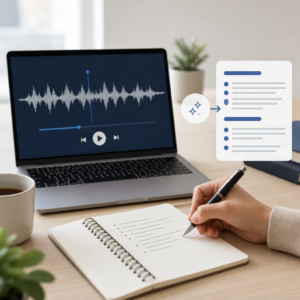
A transcript summary is not the same as a transcript itself. The transcript is the complete written version of the audio, while the summary is a condensed interpretation of the main content. This distinction is important because each format serves a different purpose. Full transcripts are valuable for records, detailed review, accessibility, and exact wording. Summaries are better for quick understanding, sharing updates, and extracting the key message from a long recording. In many cases, using both together gives the best result. A user can first generate the transcript from audio and then create a summary based on that text. This two-step process saves time and keeps important details available when needed. It also supports better organization, especially when dealing with repeated meetings, long interviews, course recordings, support calls, or research material that would otherwise be difficult to manage.
What makes a good transcript summary
A useful transcript summary should be clear, accurate, and focused on the purpose of the content. It should reflect the main ideas of the original audio without changing the meaning. Good summaries avoid copying large blocks of text unless a direct quote is necessary. Instead, they present the most relevant points in a shorter form that is easy to read. A meeting summary may include decisions, deadlines, and tasks. An interview summary may focus on the subject’s key statements and themes. A lecture summary may cover definitions, examples, and takeaways. The best summary depends on why the transcript is being used. Before writing, it helps to ask a simple question: what does the reader need to know first? This keeps the summary relevant and prevents it from becoming too broad. A focused summary is more useful than one that tries to include everything from the transcript.
Structure also improves transcript summaries. Even short summaries become easier to understand when information is grouped logically. A common method is to begin with a brief overview, then list the main points, and end with outcomes or next steps. For some content, separating information by topic works better than following the original order of the conversation. This is especially helpful when speakers move between ideas or return to the same subject several times. Clear wording matters as much as structure. Short sentences, plain language, and consistent terminology make the summary more readable. If names, dates, figures, or technical terms appear in the transcript, they should be checked carefully before being included. Summaries should also avoid overstatement. If something in the transcript is uncertain, incomplete, or unclear, the summary should not present it as confirmed. Accuracy remains essential, even when the text is shorter.
Steps to turn a transcript into a summary
A practical way to summarize a transcript starts with reading or scanning the full text once to understand the context. After that, identify the purpose of the recording and the type of summary needed. The next step is to mark key sections, repeated themes, major decisions, important facts, and any action items. In long transcripts, this can be done by highlighting names, dates, tasks, questions, and conclusions. Then remove filler language, repeated phrases, interruptions, and side topics that do not support the main purpose. Once the core points are clear, group similar ideas together and write them in a shorter form. At this stage, it helps to avoid unnecessary detail. A summary should capture the message, not every sentence. After drafting, compare the summary with the original transcript to make sure nothing important has been lost and nothing inaccurate has been added.
The type of recording often changes the best summarization method. A business meeting may need a summary with agenda topics, decisions made, unresolved issues, and responsibilities. A customer call may need problem statements, requested solutions, and follow-up actions. A podcast or webinar may benefit from theme-based sections that help readers find useful ideas quickly. Academic and research transcripts may require summaries that preserve definitions, findings, or arguments in a careful way. When the content includes multiple speakers, it can also be useful to mention who said what if the speaker identity matters to the outcome. However, not every summary needs speaker-by-speaker detail. In many cases, combining related comments into one clear point creates a more readable result. Choosing the right level of detail helps users save time while still keeping the summary informative and reliable.
How summaries support content and productivity
Transcript summaries can support many content and workflow tasks beyond simple review. A clear summary can become the basis for blog outlines, article drafts, newsletter recaps, training notes, knowledge base entries, and internal updates. For SEO purposes, summarized transcripts can help identify the main topics, questions, and keywords discussed in a recording. This makes it easier to build pages around user intent without needing to study the full transcript line by line. Summaries can also improve collaboration. Team members who were not present for a meeting can quickly understand what was discussed. Students can revisit important lecture points faster. Researchers can sort through large collections of interviews more efficiently. In content production, a summary can act as a bridge between raw audio and polished written material. This adds practical value to transcription and helps users get more from every recording they process.
There are also clear productivity benefits to creating summaries as part of a regular transcription workflow. Large transcript files can be difficult to search mentally even when digital search functions are available. A summary gives immediate orientation and can reduce repeated reading. It can also standardize how information is stored. For example, using the same summary format for each meeting, interview, or lesson makes archives easier to review later. Over time, this supports better documentation and faster decision-making. For organizations handling many recordings, summaries can reduce friction between collecting information and using it. Instead of treating transcripts as final outputs, users can treat them as source material for action. This shift is important because the real value of transcription is often not just in converting speech to text, but in making spoken information easier to understand, organize, and apply.
Best practices for accurate and useful results
To get the best results from transcript summarization, start with the best transcript possible. Good audio quality, clear speech, and careful transcript review all improve the summary stage. If the transcript contains errors, those errors can affect the final summary, especially when names, numbers, or technical terms are involved. It is also helpful to define a target format before summarizing. Some users need a short paragraph, while others need bullet-like sections rewritten into plain text, executive overviews, or action-focused notes. Consistency matters when summaries are used across a team or website workflow. A repeatable structure helps readers know what to expect and makes summaries easier to compare. Finally, summaries should be reviewed for clarity and accuracy before sharing or publishing. A strong transcript summary is concise but complete, short but meaningful, and simple without losing the original intent of the audio. When done well, it becomes one of the most valuable parts of the transcription process.


