
Why transcription matters in market research
Market research often depends on interviews, focus groups, customer calls, and product feedback sessions. These conversations contain useful details, but they can be difficult to review when they only exist as audio files. Audio transcription helps turn spoken feedback into clear text that teams can search, read, highlight, and compare. For market researchers, this makes it easier to identify common themes, repeated objections, buying motivations, and customer language. Instead of replaying long recordings many times, researchers can move through transcripts faster and focus on analysis. Transcripts also make collaboration easier because product teams, marketers, and stakeholders can review the same material without listening to every recording. This supports faster reporting and clearer decision-making. In many cases, written transcripts also help reduce the risk of missing an important quote or insight. When customer opinions are captured in text, it becomes easier to turn raw conversations into useful findings that support product development, messaging, and campaign planning.
AI transcription can be especially helpful for research teams working with many recordings at once. A series of user interviews or several focus groups can quickly create hours of audio. Converting that content into text saves time and creates a more consistent process for reviewing information. Researchers can scan transcripts for product names, pain points, feature requests, and emotional responses. This is valuable when comparing answers across different participants or audience segments. Text transcripts also support better documentation because they provide a written record of what was said during the research process. That record can be useful for internal reviews, reports, and follow-up work. While transcripts should still be checked for accuracy, especially when discussions include brand names or industry terms, they provide a strong starting point for analysis. For websites that offer AI audio to text tools, market research is a practical use case that shows how transcription supports real business needs.
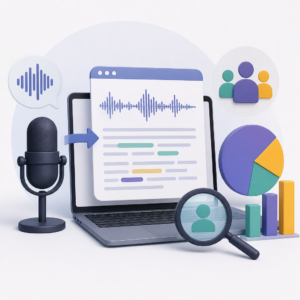
How to use transcripts to find useful insights
Once audio has been transcribed, the next step is to organize the transcript in a way that supports research goals. A simple method is to group comments by topic, such as pricing, usability, expectations, satisfaction, or competitors. This helps researchers move from raw text to patterns that can be shared with decision-makers. Highlighting exact customer phrases is also useful because it shows how people naturally describe a problem or product. That language can later support marketing copy, landing pages, FAQs, or onboarding content. Researchers can also compare transcripts from different customer groups to see where needs are similar and where they differ. For example, new users may focus on ease of use while long-term customers may talk more about advanced features. These comparisons are easier to manage in text than in audio. Searchable transcripts make this process faster because key terms can be located quickly across multiple conversations.
To get the best results, it helps to use clear recordings and a consistent workflow. Before transcription, label files by date, project, or interview type so that each transcript is easy to identify later. After transcription, review the text for speaker mix-ups, unclear wording, or terms that may need correction. If the research includes sensitive business or customer information, make sure transcripts are stored and shared carefully. Once the text is ready, teams can extract quotes, summarize findings, and build reports with stronger evidence from real conversations. Audio transcription does not replace research analysis, but it makes the analysis process more efficient and easier to scale. For companies that collect customer feedback regularly, using AI to convert audio to text can support faster learning and better decisions. In market research, clear transcripts help teams move from listening to understanding, and from understanding to action.


