
Why AI transcription has become a useful everyday tool
AI audio transcription has become a practical solution for people who need fast and readable text from spoken content. Instead of listening to the same recording many times and typing every word by hand, users can upload audio and receive a draft transcript in a short time. This helps save effort for students, freelancers, researchers, journalists, business teams, and content creators. It is especially useful when working with interviews, lectures, meetings, voice notes, podcasts, or recorded ideas. As more work and communication happen online, the need to turn spoken language into searchable text continues to grow. A transcript makes audio easier to review, organize, and reuse, which is why AI transcription tools are now part of many daily workflows. For a website focused on free audio to text conversion, this topic is important because many users are not only looking for a way to convert files, but also trying to understand why transcription matters in the first place.
One of the main benefits of AI audio transcription is speed. Manual transcription often takes much longer than the original recording, while AI can usually produce a result much faster. Another benefit is accessibility. Some people understand information better when they can read it, while others may need text for reference, translation, note-taking, or sharing. Searchability is also a major advantage. Once audio is converted into text, users can scan for names, topics, quotes, or action points without replaying the full file. This makes long recordings easier to manage. AI transcription also supports productivity by helping users turn raw spoken content into a format that can be edited, copied, summarized, or published. While results may still need review, the first draft created by AI can remove much of the repetitive work and make audio content more useful in a wide range of situations.
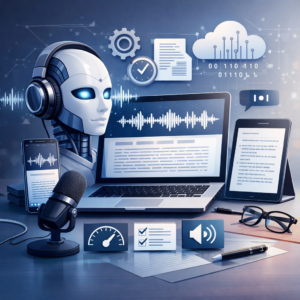
How transcripts support work, study, and content creation
In work settings, AI audio transcription can help teams keep better records of meetings, calls, and brainstorming sessions. Instead of relying only on memory or handwritten notes, a transcript gives a clear text version that can be reviewed later. This is helpful for tracking decisions, confirming details, and sharing information with people who were not present. In education, students and teachers can use transcripts to revisit lectures, lessons, and discussions. Reading a transcript can make it easier to study key points, check terminology, and create summaries. Researchers and interviewers also benefit because text is easier to analyze than long audio files. They can highlight themes, compare responses, and collect quotes more efficiently. For users searching for free transcription tools, these practical benefits often matter more than the technology itself. They want a simple way to make spoken information easier to use.
Content creators also gain value from audio transcription. A podcast episode, video recording, webinar, or voice memo can become text that supports many other formats. A transcript can be turned into captions, articles, blog posts, social media snippets, show notes, or internal documentation. This means one recording can support several pieces of content without starting from zero each time. Transcripts can also improve content management by making archived recordings easier to search and reference. For businesses and creators who publish regularly, this can save time and improve consistency. Free AI transcription tools are especially appealing to individuals and small teams that want to work efficiently without adding extra costs. By converting speech into editable text, transcription helps bridge the gap between spoken ideas and published content, making it easier to move from recording to final output.
What affects the quality of AI audio to text results
Although AI transcription offers clear benefits, the quality of the result depends on the source audio. Clear speech usually leads to better transcripts. Background noise, overlapping voices, strong accents, low recording quality, and unclear pronunciation can make transcription harder. Audio with one speaker in a quiet setting is often easier to process than a busy group conversation. File quality matters too. A clean recording with balanced volume gives AI tools a better chance of recognizing words correctly. Language choice is another factor. Users should select the correct language or dialect when possible, especially if the audio includes regional speech patterns. This can improve recognition and reduce errors. For best results, many users review the transcript after generation and fix names, technical terms, or punctuation. AI is useful for creating a strong draft, but human review remains important when accuracy is critical.
It is also helpful to understand that transcription needs vary by task. A rough transcript may be enough for personal notes or quick internal use, while legal, medical, or formal business documents often require careful checking. Users should match their expectations to the purpose of the transcript. A free online tool can be ideal for fast drafts, routine recordings, and everyday productivity. When used with clear audio and simple editing, AI transcription can provide reliable support for many common needs. This balanced approach helps users get more value from the technology without assuming it is perfect in every case. For SEO-focused content on an audio to text website, explaining these factors helps users make better decisions and achieve stronger results when using AI transcription services online.
Why free online transcription tools continue to grow in demand
The demand for free online audio to text tools continues to rise because people create and consume more audio than ever before. Voice messages, remote meetings, online courses, interviews, and video content all produce spoken information that can be hard to manage without text. A free AI transcription service lowers the barrier for anyone who wants to organize that information quickly. Users do not always need advanced software or a complicated workflow. In many cases, they simply want to upload a file, receive text, and continue working. This convenience makes browser-based transcription especially attractive. It supports casual users with small tasks and also helps professionals who need a quick first draft before editing. As digital content grows, the value of turning speech into text in a simple and affordable way becomes more obvious.
Free transcription tools also support broader access to information. Text can be easier to skim, quote, translate, archive, and share than audio alone. For websites that offer AI audio to text conversion, this creates lasting value beyond the act of transcription itself. A transcript can support better communication, faster review, and more flexible content use. It can help users study, document conversations, repurpose recordings, and reduce manual work. These practical advantages explain why AI transcription is no longer limited to specialists. It is now relevant to everyday tasks across many industries and personal projects. An article about the benefits of AI audio transcription fits naturally alongside guides about transcription accuracy, editing, and use cases because it helps users understand the larger reason this technology matters. When people see how transcripts improve speed, access, and usability, the value of audio to text becomes clear.


